
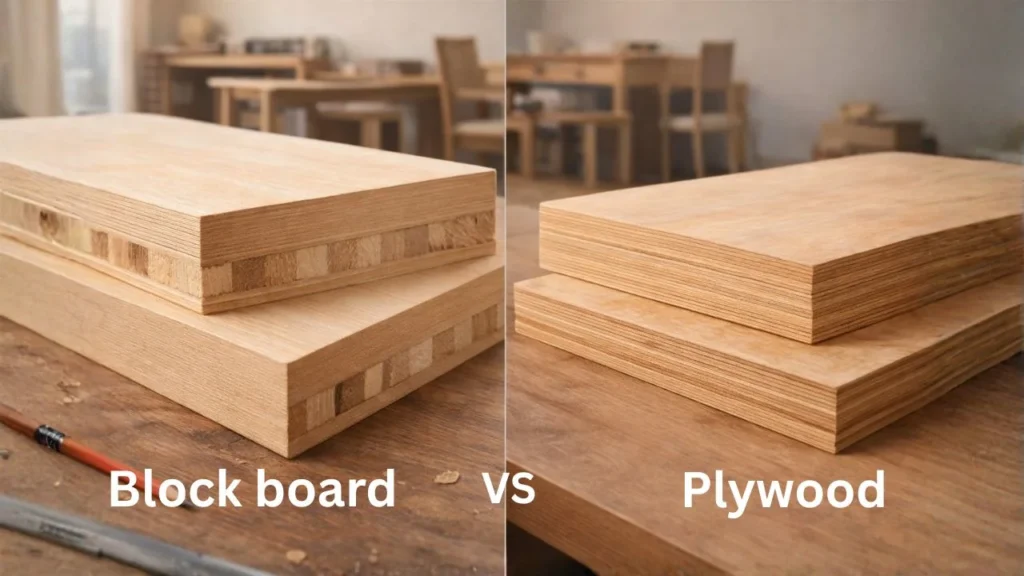
Blockboard and plywood can both be considered for furniture, but their different internal construction affects how they should be selected and used. For shelves, doors and tables, begin with the component dimensions, support arrangement and finish rather than a blanket claim that one material is always stronger.
Understand the core
Blockboard typically has a core made from timber strips between outer layers. Plywood uses multiple veneer layers. In either product, construction quality, bonding and material selection influence performance. A product name by itself cannot tell you the safe load or the amount of bending to expect.
Ask to inspect a sample edge and obtain the available specification. For blockboard, understand the orientation of the core strips so the cutting layout and supports suit the intended component.
Plan shelves around the load
Long shelves may hold books, crockery or stock that weighs far more than decorative objects. Record the intended load and clear distance between supports. Discuss the need for intermediate supports, front rails or another stiffening detail with the furniture maker.
Do not rely on a statement that blockboard never sags. All furniture needs an appropriate design, and stiffness varies between products. A thicker panel is not always a substitute for correcting an excessive unsupported span.
Think about hardware and edges
Doors need suitable hinge positions and secure fixing points. Tables need stable underframes and connections that suit the chosen panel. The carpenter should check how the selected material behaves at cut edges and where screws will be installed.
For visible edges, agree on lipping, edging or another finishing method. A laminate or veneer can create the desired surface appearance, but the underlying construction still needs to suit the job.
Compare finished cost
Ask for separate prices for sheets, cutting, edge treatment and the applied surface finish. Include hardware and supporting frames. A material that is convenient for one cutting layout may create extra waste in another, particularly when direction matters.
Bring a drawing showing shelf lengths, door sizes or table dimensions to Comply. Request current blockboard and plywood options with the relevant grades and thicknesses. Let the person responsible for the furniture design approve the final specification before the boards are cut.