
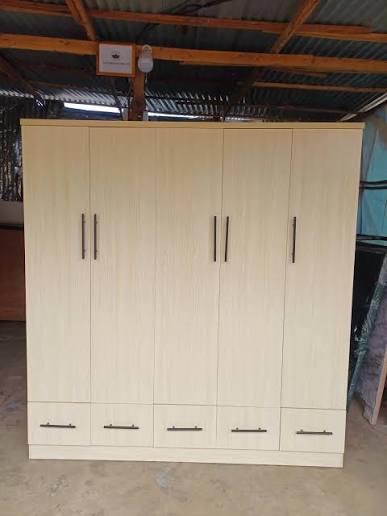
The best wardrobe starts with an inventory of what it needs to hold. Hanging clothes, folded linen, shoes and luggage need different spaces. Once the layout is clear, choosing boards and hardware becomes easier and the quotation becomes more accurate.
Measure the room before designing
Record wall width, ceiling height, skirting, sockets and any uneven surfaces. Allow space for the wardrobe doors to open without striking the bed or room door. Sliding systems need their own track and clearance requirements, so select the mechanism before finalising internal dimensions.
For a fitted wardrobe, the carpenter should check the walls and floor rather than assuming the opening is square. Installation fillers and adjustment space should be included in the drawing.
Choose boards for each part
Laminated boards can provide a ready decorative face for wardrobe interiors and fronts. Plain MDF may suit doors that will be painted or routed. Other specified board products may suit particular shelves or structural parts of the unit.
Discuss door weight and height, hinge capacity and shelf span with the furniture maker. Large doors and long shelves need a suitable design; choosing a board by colour or nominal thickness alone is insufficient.
Make storage accessible
Put frequently used items within comfortable reach. A deep shelf may hold more on paper but make items at the back difficult to find. Drawers and pull out accessories need clearances, suitable runners and space to open.
Avoid closing a new wardrobe against a damp wall. Resolve the source of moisture and agree on appropriate ventilation and separation details. A laminated board surface does not fix a building moisture problem.
Keep the finish consistent
Select the face finish and edge colour together. Wood effect patterns may need a consistent direction across doors and visible panels. Show this on the cutting list so the workshop does not rotate components merely to save sheet area.
Confirm handle positions, exposed edges and the appearance of the back panel before production. These small decisions affect how finished the wardrobe looks.
Request a complete material quote
Comply can be approached with your wardrobe drawing, board preference, finish reference and cutting requirements. Ask what is available and request a quotation that identifies sheets, edging and any offered processing services separately. Keep hardware and installation in the overall project budget so the final wardrobe remains practical as well as attractive.